
Chinese Foreign Minister Wang Yi has expressed readiness to join hands with India's National Security Advisor Ajit Doval to "properly handle" issues related to the situation on the ground in the border areas, amid the protracted border row in eastern Ladakh.
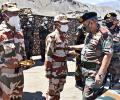
China has protested to India over Chief of Defence Staff General Bipin Rawat's reported remarks about Beijing constituting the "biggest security threat", the Ministry of Defence here said on Thursday.

China said that for a long time China has been conducting activities on its side of the Line of Actual Control and they have always complied with relevant agreements.
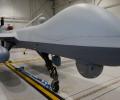
The sources said the talks are focused on sorting out certain issues relating to cost component, weapons package and technology sharing.

Both the Apache and Chinook helicopters have been pressed into service as part of the IAF's deployment along the LAC in view of the bitter standoff with China in eastern Ladakh, officials said.

Defying the COVID-19 social distancing norms, huge crowds gathered to pay respects to the soldiers amid emotional moments.
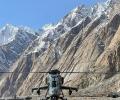
Disengagement of Indian and Chinese troops has started at two friction points in Demchok and Depsang Plains in the Eastern Ladakh sector, defence officials said.
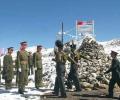
The Indian delegation led by Lt General Harinder Singh, the general officer commanding of Leh-based 14 Corps, and Commander of the Tibet Military District Maj Gen Liu Lin held an extensive meeting in Maldo on the Chinese side of the Line of Actual Control in eastern Ladakh on Saturday that began at around 11.30 am and went on till evening.
"We are capable of properly resolving the issues between us through dialogue and consultation. We do not need the intervention of the third party", he said.
There was no comment from the Indian side on the statement made by the Chinese defence ministry spokesperson Colonel Wu Qian, and carried by China's official media.
'The one aspect which no Indian military thinker would wish to see emerge is a LoC type of posture at the LAC.' 'The LoC is manned for 750 km and terrorist infiltration has led to the creation of a virtual fortress along its entire length.' 'Something mirroring this at the LAC is going to be expensive although deployment everywhere is not warranted there.' 'However, given the complete trust deficit, there appear few alternatives,' notes Lieutenant General Syed Ata Hasnain (retd).
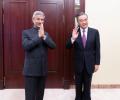
External affairs minister S Jaishankar has told his Chinese counterpart Wang Yi that the two sides should work for an early resolution of the remaining issues along the LAC in eastern Ladakh to restore peace and tranquility in the border areas as this has been an essential basis for progress in Sino-India ties.

The enhancement of combat capability by the two armies in the region came even as both the countries continued their efforts to resolve the dispute through talks at military and diplomatic levels.
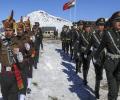
The Chinese government had "planned" the Galwan incident in June even as Beijing ramped up its multiyear coercion campaign against its neighbours, provoking military or paramilitary standoffs with countries from Japan to India, the United States top panel said in its report released on Wednesday.
During their hour-long in-person meeting on the sidelines of a Shanghai Cooperation Organisation (SCO) conclave in Dushanbe on Wednesday, External Affairs Minister S Jaishankar also told his Chinese counterpart and State Councilor Wang Yi that any unilateral change in the status quo along the Line of Actual Control (LAC) was 'not acceptable' to India and that the overall ties can only develop after full restoration of peace and tranquillity in eastern Ladakh.

The Ministry of External Affairs said the two ministers discussed the outstanding issues related to disengagement from all friction points along the Line of Actual Control in eastern Ladakh.
The two armies had mutually decided not to resort to use firearms during face-offs in sync with provisions of two agreements on border management.

China and India should put their differences on the border issue at a "proper position" in bilateral relations and stick to the "right direction" of bilateral ties, Chinese Foreign Minister Wang Yi said on Friday.
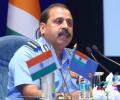
The Indian and Chinese troops are engaged in a five-month bitter standoff in eastern Ladakh.
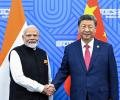
The Galwan clash occurred six months after the Doklam disengagement and two high-profile meetings. India should not be caught by surprise once again, asserts former foreign secretary Shyam Saran.
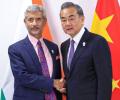
The joint statement said Jaishankar and Wang agreed that both sides should take guidance from the series of consensus reached between leaders of the two countries on developing India-China relations, including not allowing differences to become disputes.
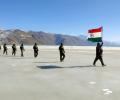
'India's challenge is status quo ante. China's challenge is a face-saving exit'
India and China should be able to achieve status quo in eastern Ladakh in a gradual manner as both sides understand that it is in the best interest of ensuring peace and tranquillity in the region, Chief of Defence Staff General Bipin Rawat said.

Terrorism and insurgency in J&K had subsided when India demolished East Pakistan -- for the simple reason that Pakistan understands power. We need to follow Chanakya's dictum of Saam, Daam, Dand, Bhed for strategising against Pakistan, asserts Lieutenant General Prakash Katoch (Retd). The ground truth is that unless we are prepared to acknowledge our shortcomings, including massive intelligence failures, punish those responsible and take corrective actions, we will continue in the same vein, asserts Lieutenant General Prakash Katoch (Retd).

'Pakistan has robust incentive to turn heat on LoC.'

Indian Army chief General Manoj Mukund Naravane on Tuesday said that as far as the western front was concerned, there is an increase in the concentration of terrorists in various launch pads and there have been repeated attempts of infiltration across the Line of Control.
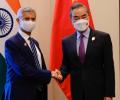
External Affairs Minister S Jaishankar on Thursday conveyed to his Chinese counterpart Wang Yi the need for an early resolution of all outstanding issues along the Line of Actual Control in eastern Ladakh, and asserted that bilateral ties should be based on mutual respect, mutual sensitivity and mutual interest.

China on Thursday said the meeting between Prime Minister Narendra Modi and Chinese President Xi Jinping in Russia's Kazan on Wednesday carries a "great significance" as they reached an "important common understandings" to improve the bilateral ties.

The Indian Army will continue to maintain its aggressive posturing in all disputed areas in eastern Ladakh and will not back off till status quo is maintained, sources said.

The armies are working to schedule their seventh round of talks to take steps towards "early and complete" disengagement of troops along the LAC in eastern Ladakh.

After his statement, opposition leaders will speak and if required Singh may give a clarification, the sources said.
It is learnt that the face-off took place after a Chinese patrol tried to enter Indian territory and the troops of China's People's Liberation Army were forced back.
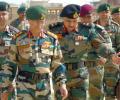
The main focus will be on the situation in eastern Ladakh where Indian and Chinese troops are locked in an eyeball-to-eyeball face-off in sensitive areas like Pangong Tso, Galwan Valley, Demchok and Daulat Beg Oldie

The home minister also said that the government is committed to protecting the sovereignty and security of the country.
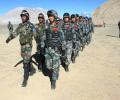
Indian and Chinese troops remained engaged in an eyeball-to-eyeball situation in several disputed areas.

"The Modi government's approach to the entire crisis could be described as DDLJ: Deny, Distract, Lie and Justify," Ramesh said.
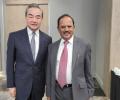
Doval is in Beijing for the 23rd round of the Special Representatives' talks being held after a gap of five years.
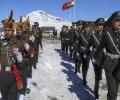
Sources said India will not lower its guard and will maintain the current state of very high-level of combat readiness in eastern Ladakh till there are visible changes in the ground situation.
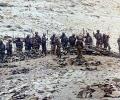
'The Galwan Valley clashes helped us prioritise our national security approach towards the northern border'

Jaishankar said that both sides also exchanged views on the next steps in the India-China bilateral ties.
